The what ifs at night. The racing heart before a big day. The need to know, for sure, that everything will be okay. If worry follows you around and anxiety is exhausting, you are far from alone.
Making Peace with Worry is a 23-page printable, CBT-informed workbook that offers a gentle, practical way to understand worry. Using ideas from cognitive behavioral therapy (CBT), you will learn how the anxiety cycle works, try scheduled worry time, practice living with uncertainty, and take small, steady steps toward the things worry tells you to avoid. You do not have to do every page, and you do not have to do it perfectly.
WHAT THIS WORKBOOK HELPS YOU DO
Understand the cycle: Read plain-language pages on what CBT is, the anxiety cycle, and why avoidance and reassurance can keep worry going.
Sort your worries: Learn the difference between problems you can act on and spinning what ifs, and spot common worry thinking traps.
Make room for uncertainty: Notice certainty habits, try scheduled worry time, and weigh the evidence on worried predictions.
Take small steps: Build a fear ladder, use a thought record, and find calming words for worry.
Live by your values: Choose what matters most to you, track worry week by week, and close with a reflection page.
WHAT'S INCLUDED
23-page printable workbook (A4, digital download)
Welcome, Important Information, Copyright Notice, and How to Use This Workbook
What CBT Is
Thinking Traps at a Glance
The Anxiety Cycle
Worry and Problem Solving
Living with Uncertainty
Noticing My Worry Patterns
My Worry Check-In
Scheduled Worry Time
Weighing the Evidence
Facing Fears Step by Step
My Thought Record
Calming Words for Worry
Living by My Values
When to Reach Out
Weekly Tracker
Reflection page and Closing: Where to Go from Here
Delivery: Instant digital download. No physical item will be shipped.
WHO IS THIS FOR?
Adults who feel weighed down by worry, overthinking, or the need for certainty, and who want a printable place to practice CBT-informed skills. It is written for individuals, and a therapist or counselor may also choose to use it in session.
HOW TO USE
1. Purchase and download your PDF.
2. Print it, or type into it with a PDF or note-taking app.
3. Set aside 10 to 15 quiet minutes, ideally not right before bed. Move through the pages in order or jump to what you need, and skip anything that does not fit. You can come back to worry time, the thought record, and the weekly tracker whenever worry shows up.
IMPORTANT INFORMATION
This workbook is CBT-informed psychoeducation for self-reflection and educational use only. It is not a substitute for professional mental health care, and it is not therapy, a diagnostic tool, or medical advice. It cannot diagnose, assess, or treat any condition, including anxiety disorders, panic, or depression. If worry, panic, or low mood last or affect your daily life, or if you have new physical symptoms, please reach out to a doctor or licensed mental health professional. If you are in crisis or thinking about harming yourself, call or text 988 or call 911. © 2026 Colorful Emotions Counseling. Personal use only. Do not copy, share, resell, or redistribute.
You do not have to know what comes next to take the next step.

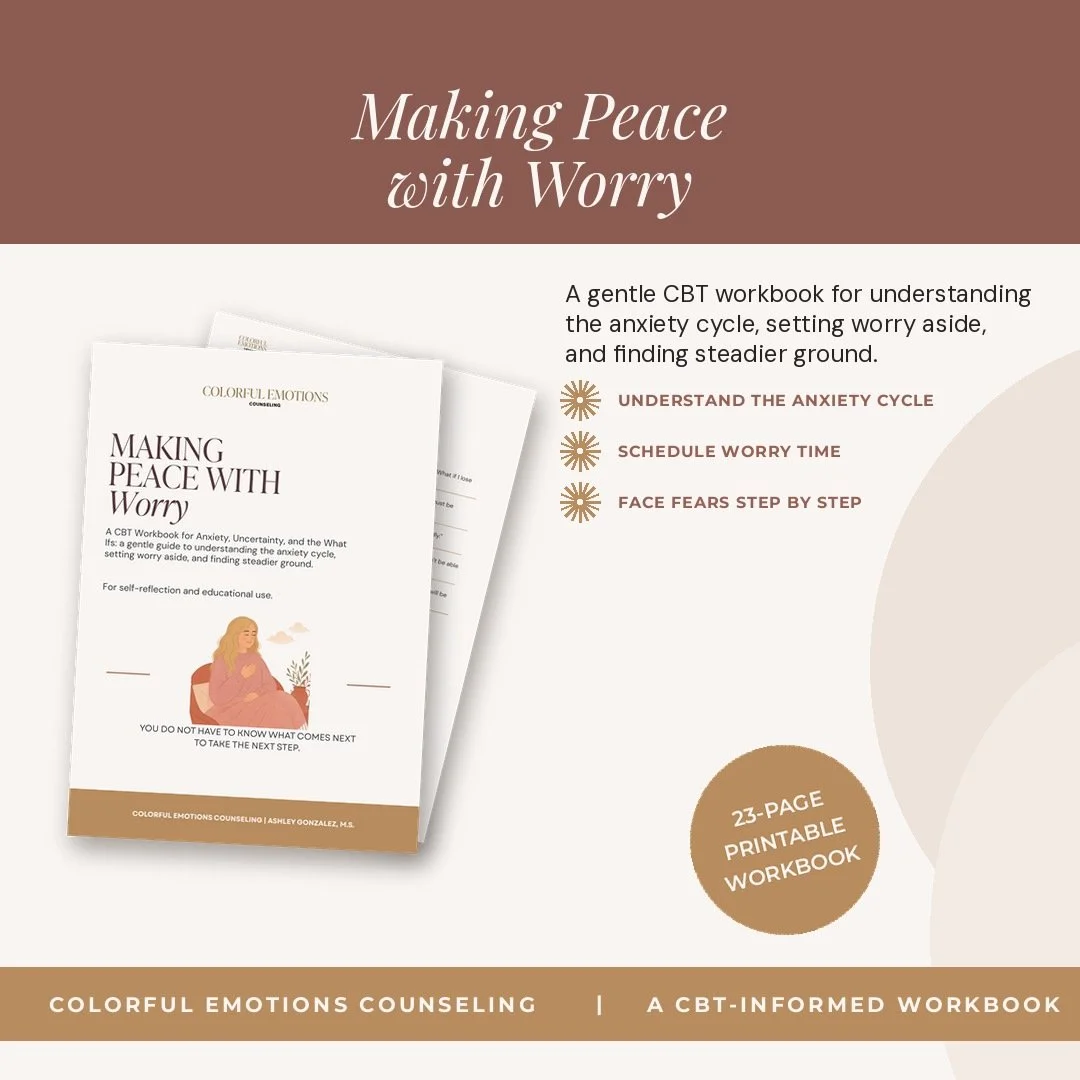 Image 1 of 6
 Image 2 of 6
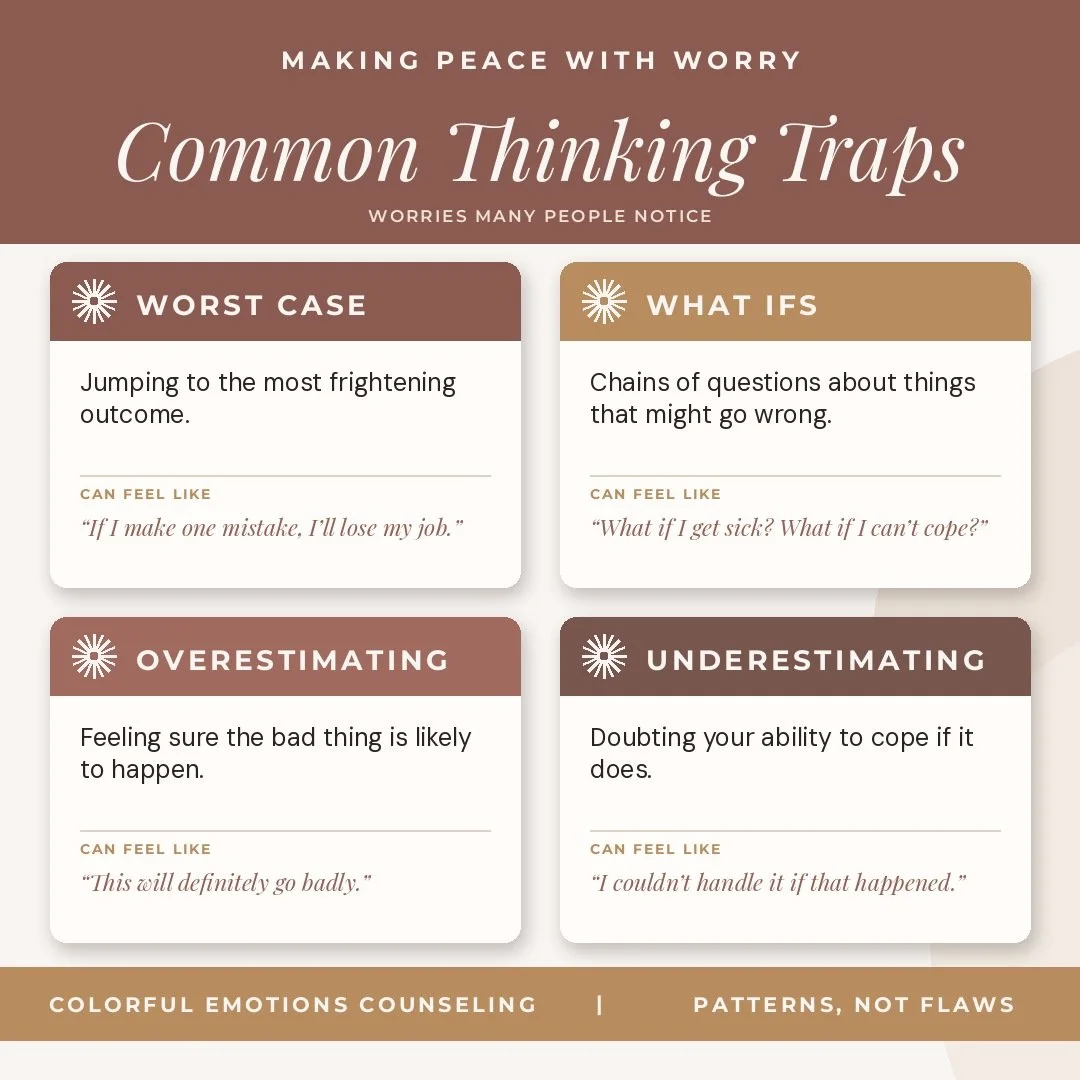 Image 3 of 6
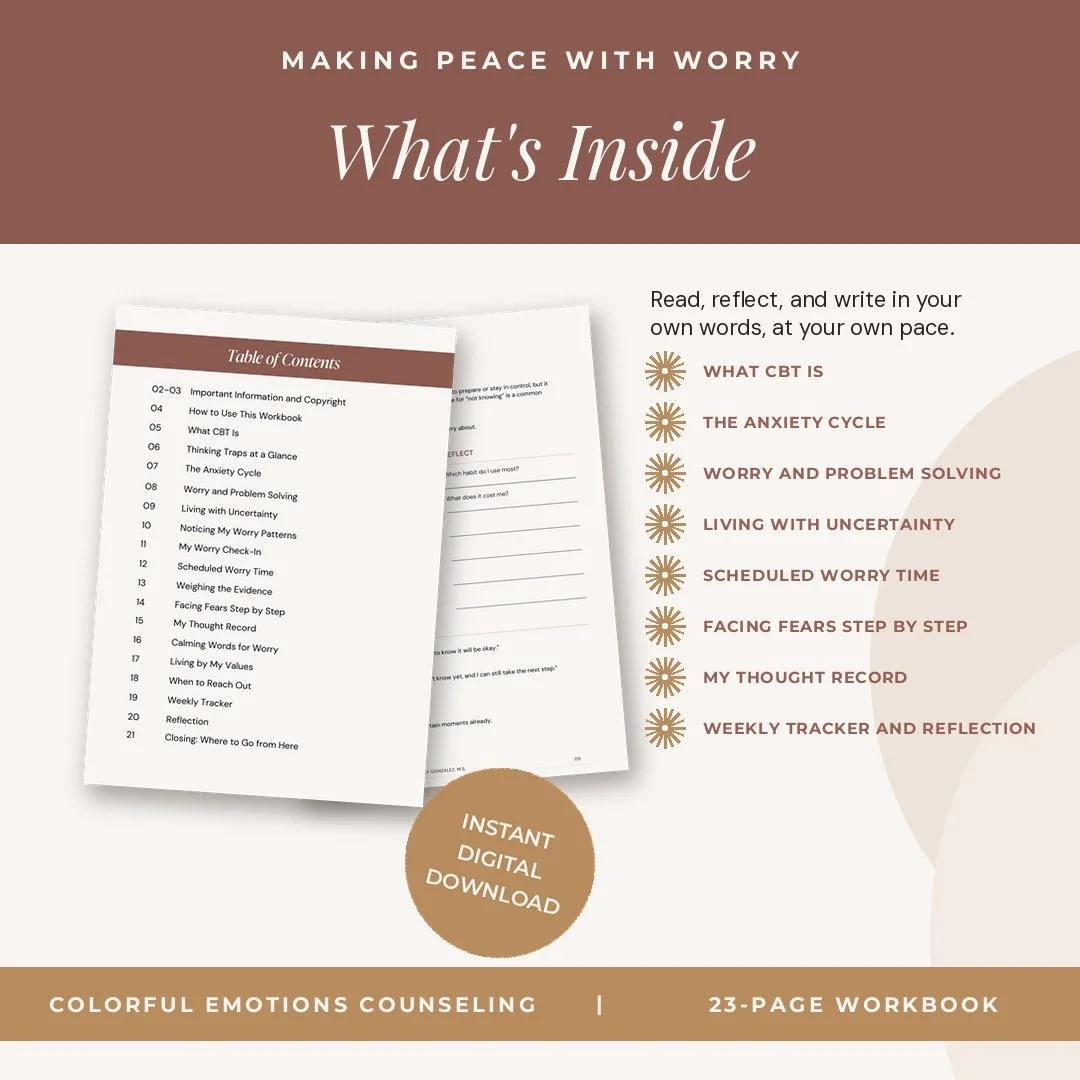 Image 4 of 6
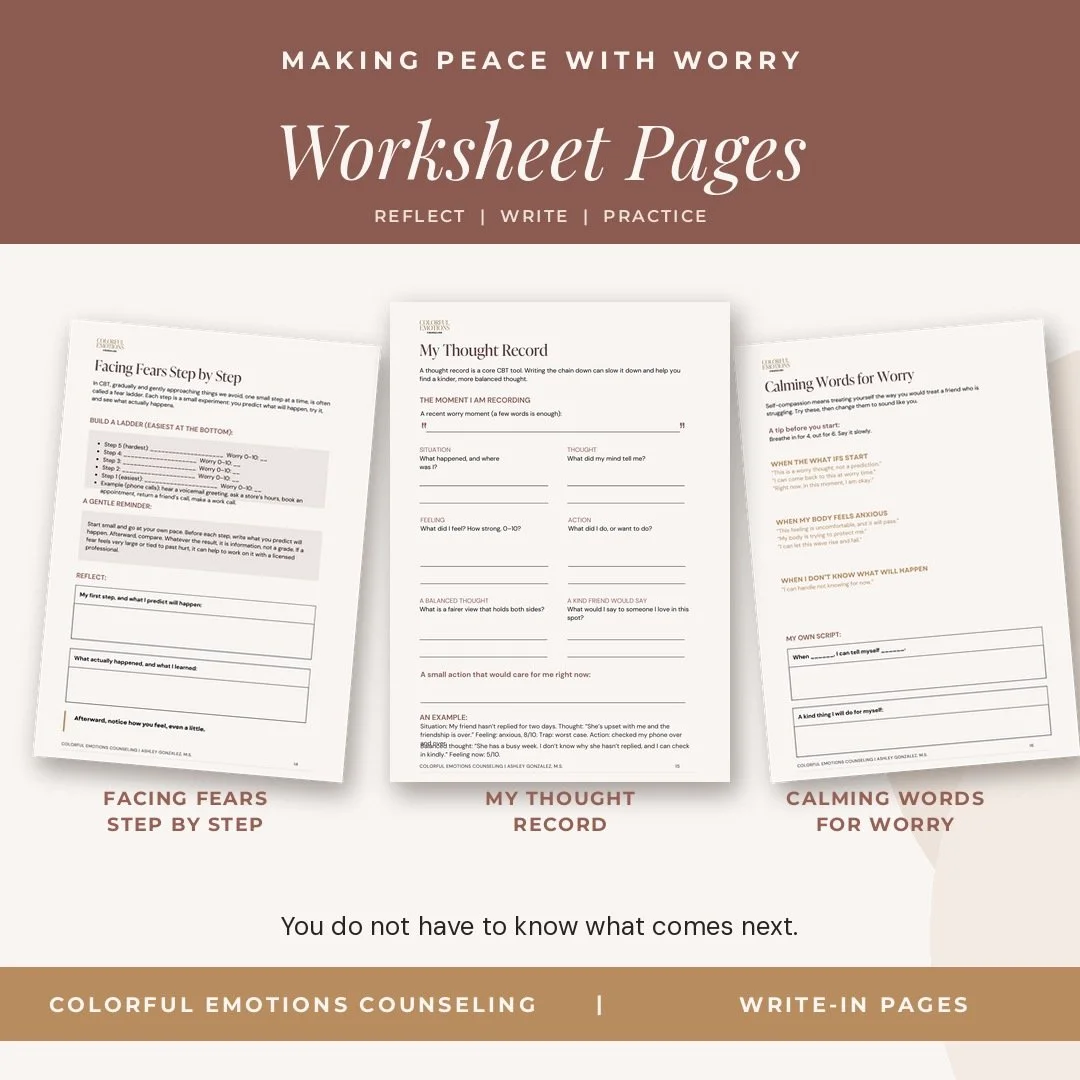 Image 5 of 6
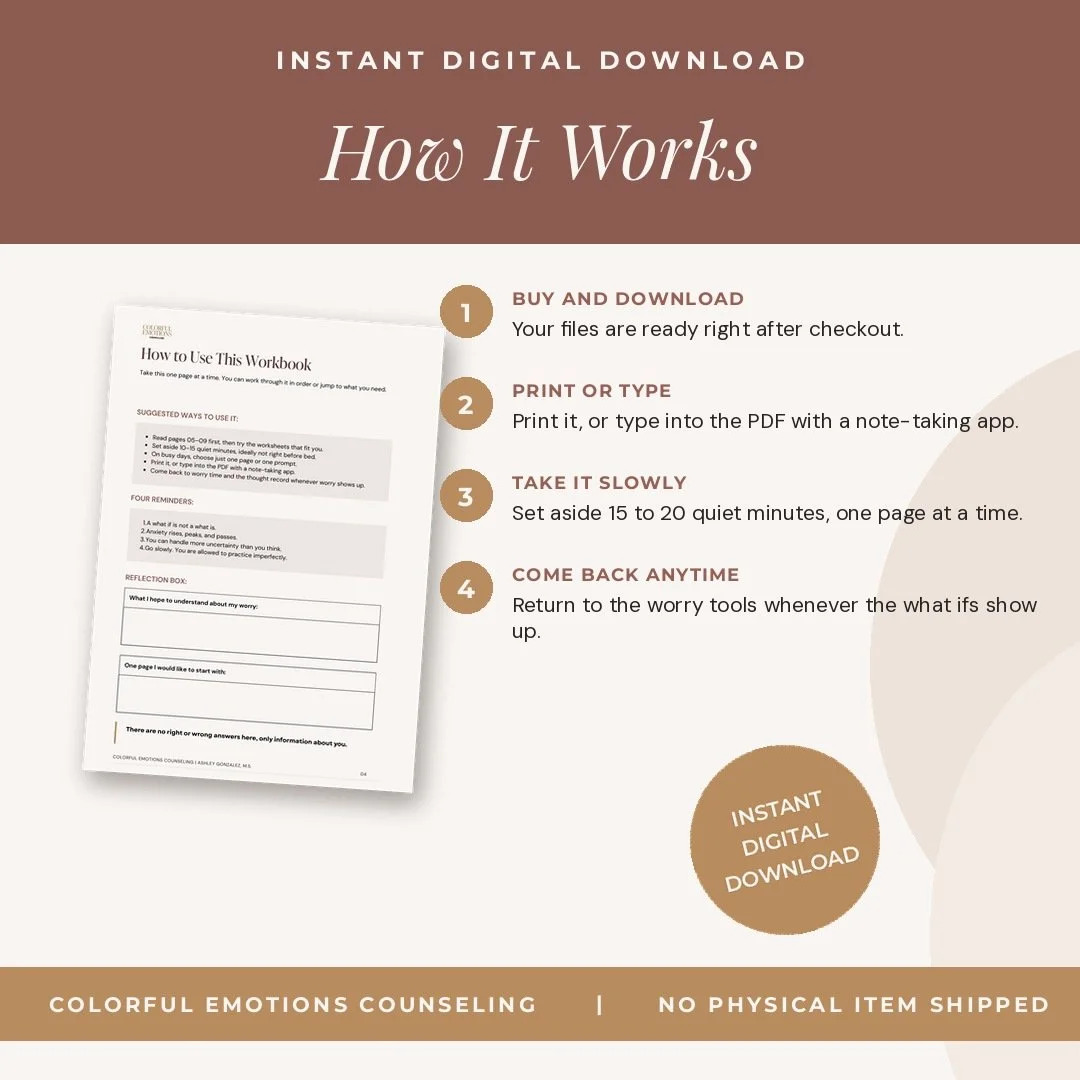 Image 6 of 6