Loving someone and being hurt by them. Feeling grateful and exhausted. Being proud of yourself and still wanting to grow. If it feels like you always have to choose one side, you are far from alone.
Two Things Can Be True is a 23-page printable, DBT-informed workbook that offers a gentle, practical way to practice dialectical, both-and thinking from dialectical behavior therapy (DBT). You will learn what dialectical means, spot either-or thinking traps, practice swapping "but" for "and," hold two feelings at once, and look for a middle path. You do not have to do every page, and you do not have to do it perfectly.
WHAT THIS WORKBOOK HELPS YOU DO
Understand dialectics: Read plain-language pages on what DBT is and what it means for two things to be true at once.
Spot either-or thinking: Notice all-or-nothing, always/never, and right-or-wrong traps.
Swap but for and: Use a simple worksheet to rewrite "but" thoughts as "and" thoughts.
Hold more than one truth: Practice holding mixed feelings, acceptance and change, and two sides in relationships.
Find the middle path: Balance two extremes, write your own both-and statements, track your practice week by week, and close with a reflection page.
WHAT'S INCLUDED
23-page printable workbook (A4, digital download)
Welcome, Important Information, Copyright Notice, and How to Use This Workbook
What DBT Is
Common Either-Or Traps
What "Dialectical" Means
Either-Or vs. Both-And
Noticing My Either-Or Thinking
Holding Two Feelings
The "But" to "And" Worksheet
Acceptance and Change
Finding the Middle Path
Two Truths in Relationships
My Both-And Statements
Two Things Can Be True in Real Life
When to Reach Out
Weekly Tracker
Reflection page and Closing: Where to Go from Here
Delivery: Instant digital download. No physical item will be shipped.
WHO IS THIS FOR?
Adults who notice black-and-white thinking, struggle with mixed feelings, or feel pulled between two sides, and who want a printable place to practice DBT-informed skills. It is written for individuals, and a therapist or counselor may also choose to use it in session.
HOW TO USE
1. Purchase and download your PDF.
2. Print it, or type into it with a PDF or note-taking app.
3. Set aside 10 to 15 quiet minutes. Move through the pages in order or jump to what you need, and skip anything that does not fit. You can come back to the "but" to "and" worksheet, your both-and statements, and the weekly tracker anytime.
IMPORTANT INFORMATION
This workbook is DBT-informed psychoeducation for self-reflection and educational use only. It is not a substitute for professional mental health care, and it is not therapy, a diagnostic tool, or medical advice. It cannot diagnose, assess, or treat any condition, including depression, anxiety, or borderline personality disorder. If strong emotions, relationship distress, or low mood last or affect your daily life, please reach out to a doctor or licensed mental health professional. If you are in crisis or thinking about harming yourself, call or text 988 or call 911. © 2026 Colorful Emotions Counseling. Personal use only. Do not copy, share, resell, or redistribute.
Two things can be true at the same time.

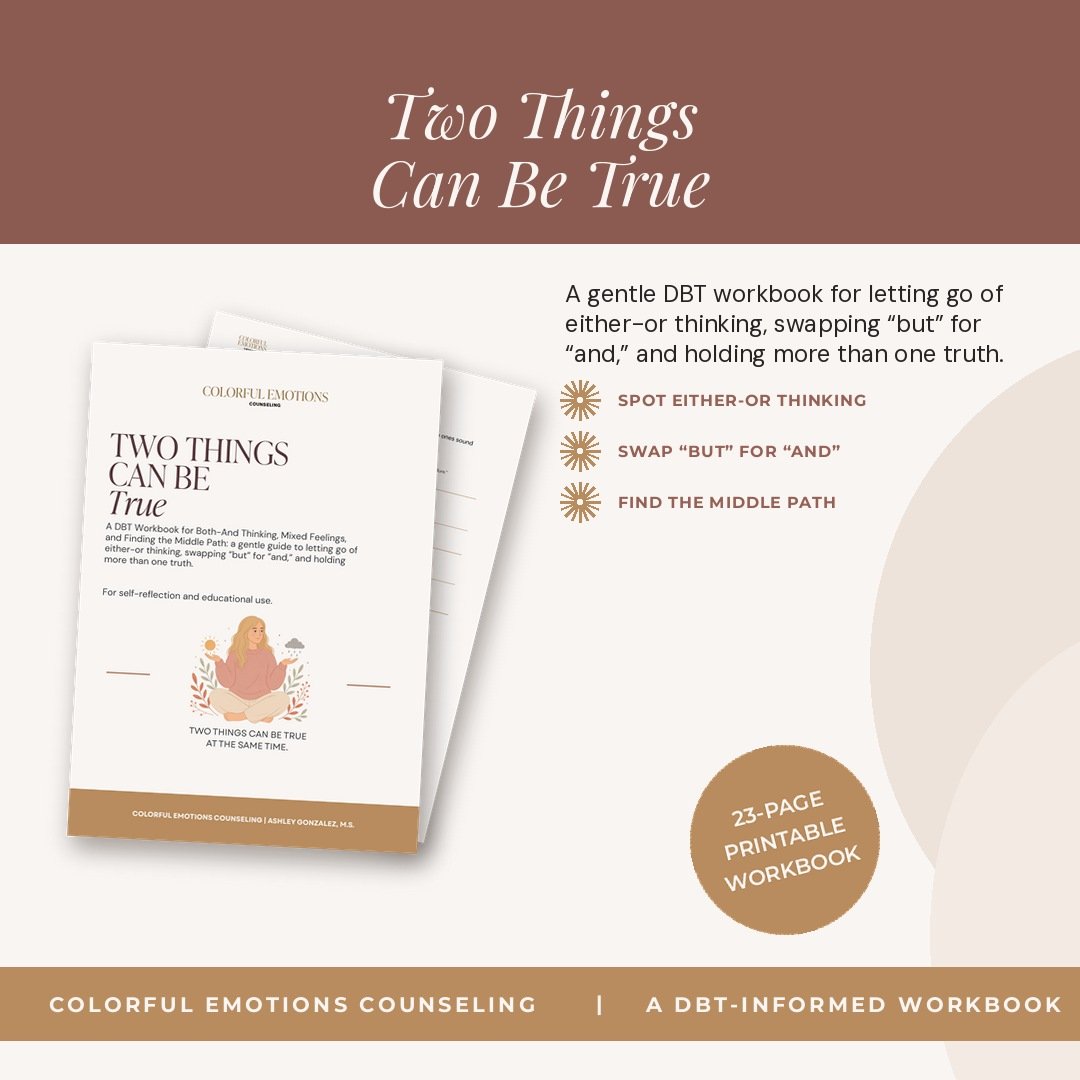 Image 1 of 6
 Image 2 of 6
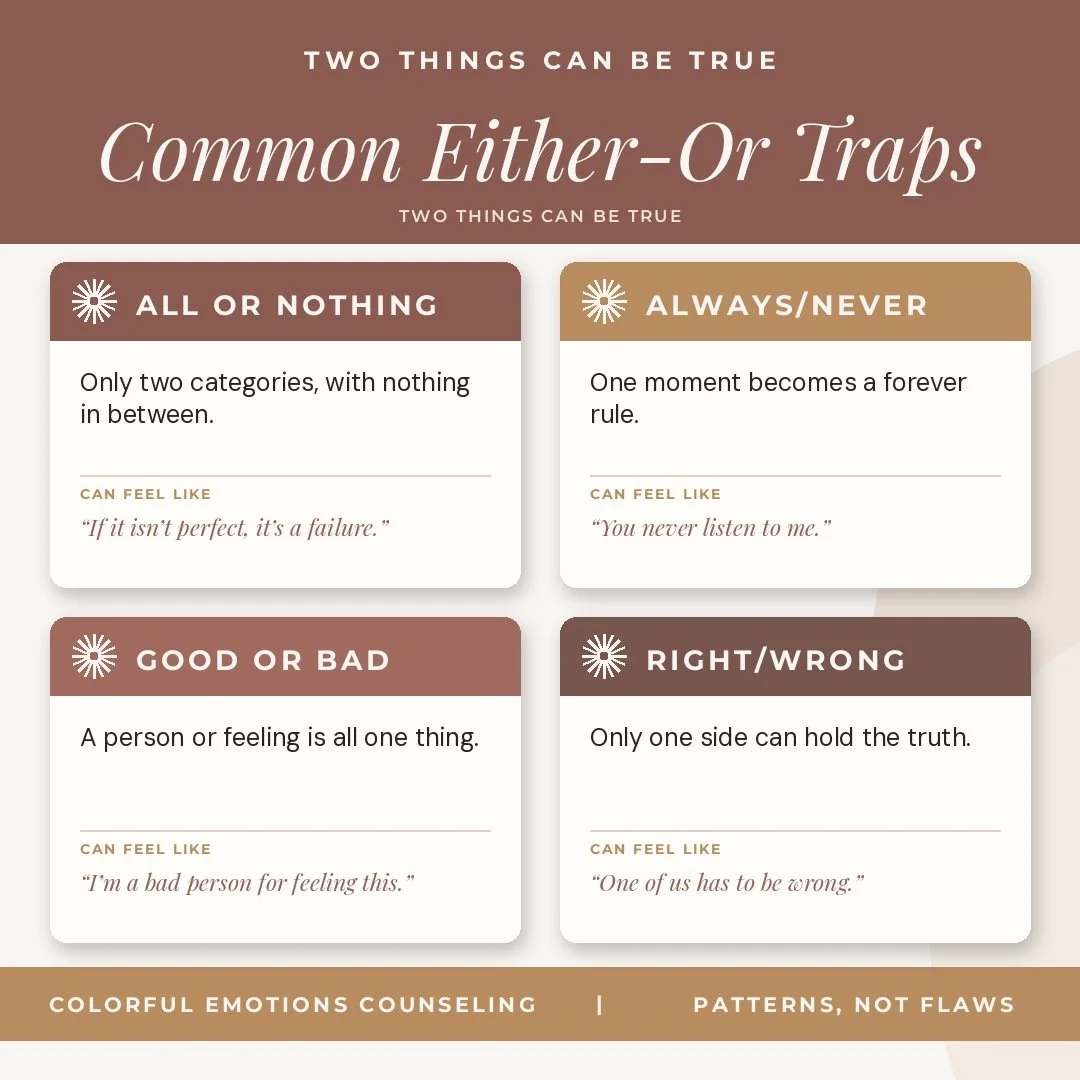 Image 3 of 6
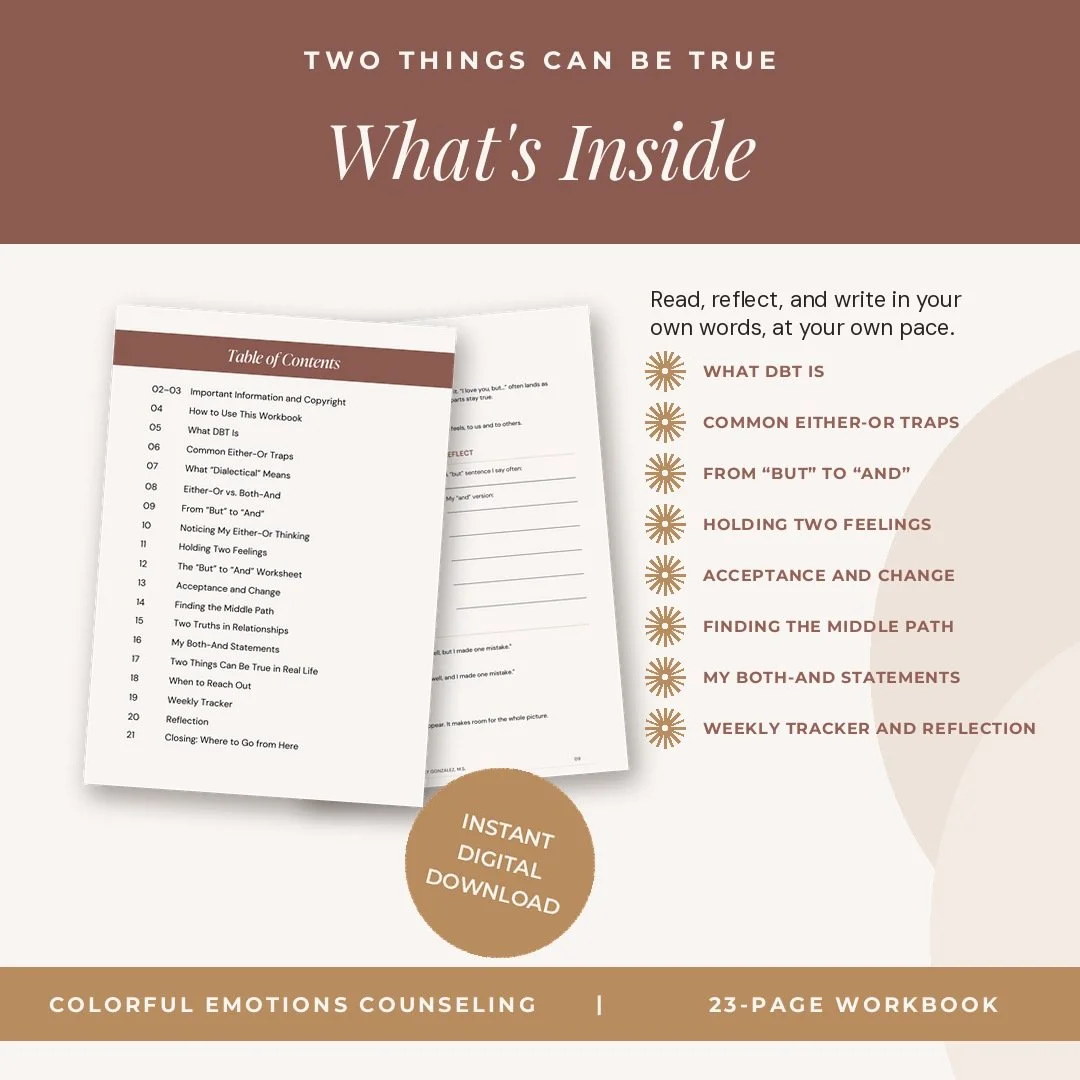 Image 4 of 6
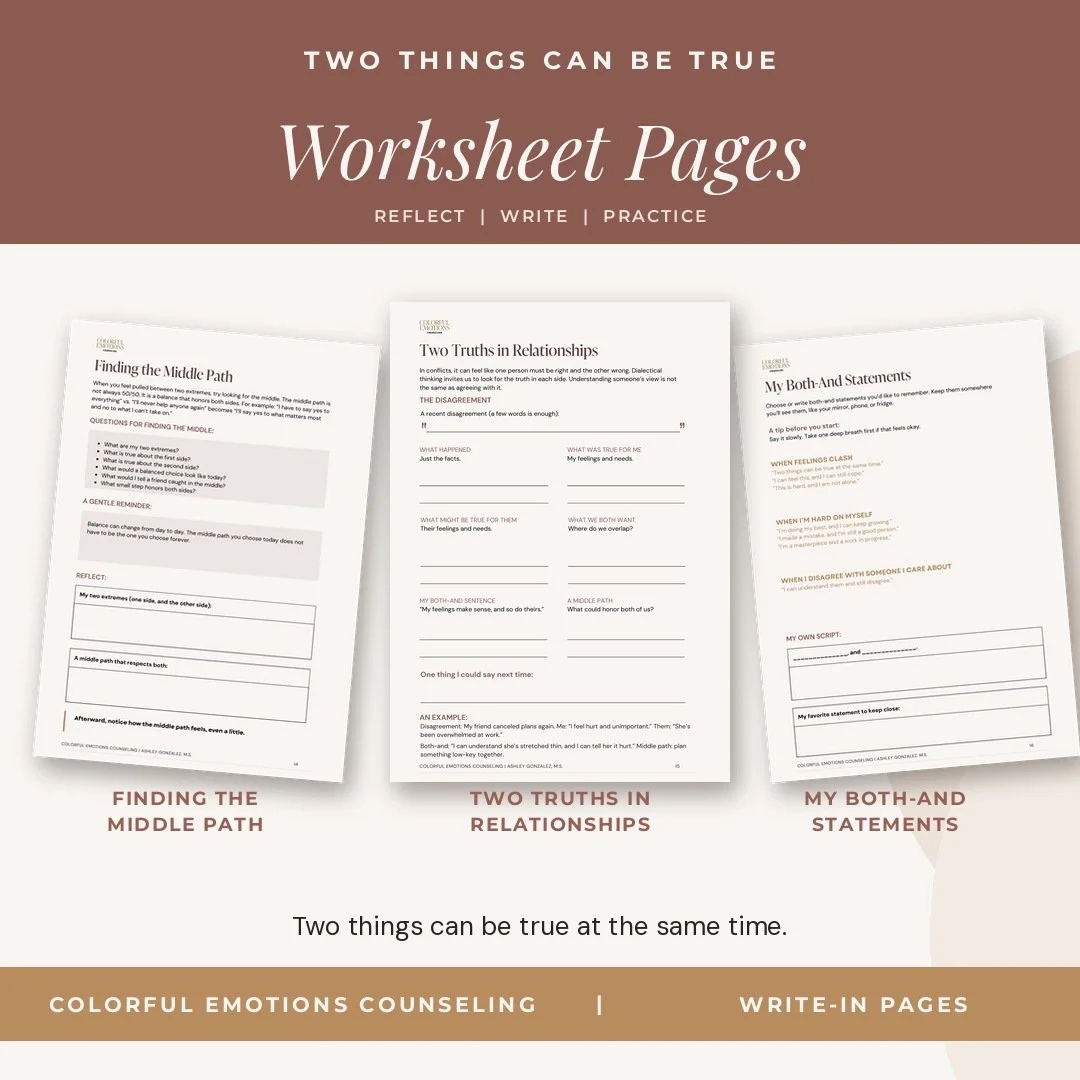 Image 5 of 6
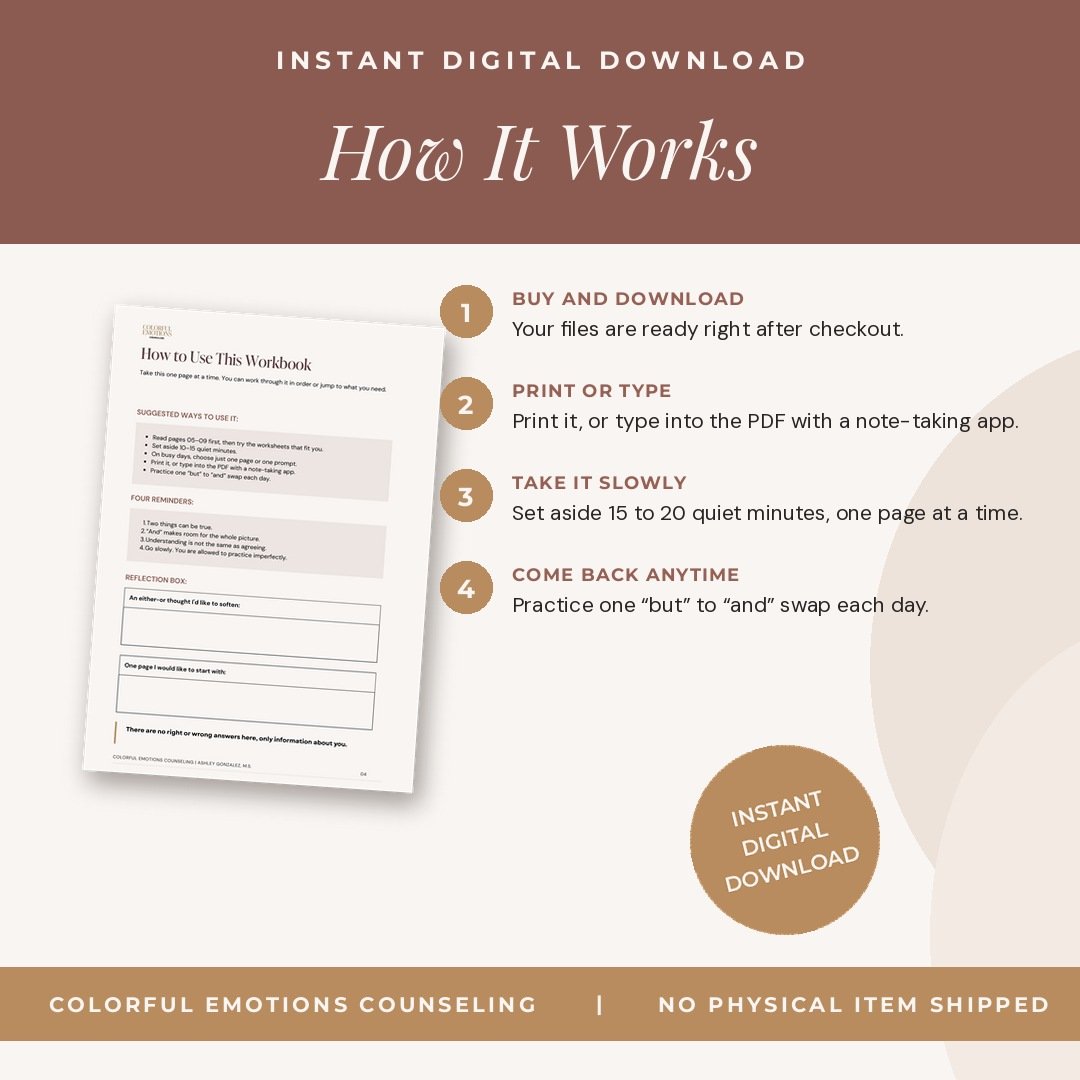 Image 6 of 6